

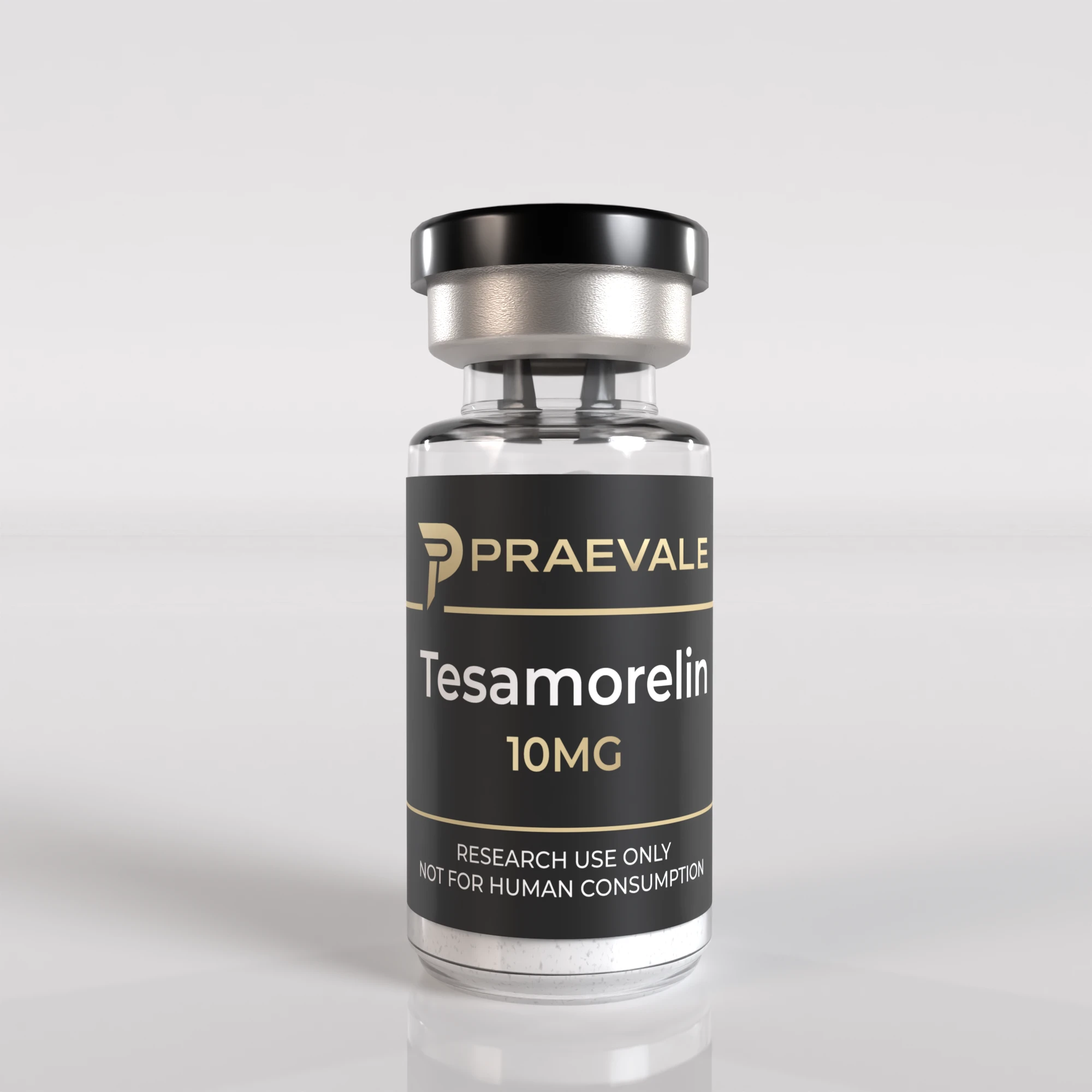

Tesamorelin
Tesamorelin is a synthetic peptide designed for research applications. As a growth hormone secretagogue, it binds to growth hormone-releasing hormone (GHRH) receptors, potentially influencing lipolysis and muscle-sparing effects in animal studies. This peptide has been explored in preclinical models for its effects on fat redistribution and metabolic regulation under controlled scientific conditions.
Research Context
Tesamorelin is primarily investigated in preclinical and translational research settings to understand its mechanisms of action in animal models. Due to its potential to modulate growth hormone secretion, it has been studied in studies examining metabolic processes, including changes in fat distribution and muscle preservation, particularly under conditions such as spaceflight or disease states. Its role in research is limited to investigating biological pathways rather than therapeutic applications.
Research Overview
Tesamorelin is a decapeptide analog derived from the GHRH family, originally developed to enhance growth hormone secretion. In research settings, it is utilized to assess its effects on endogenous hormone release and metabolic responses in laboratory animals. While studies have reported potential benefits in controlled conditions—such as reduced abdominal fat accumulation and improved muscle maintenance—its effects vary depending on the experimental context, dose, and animal model employed.
Key Research Focus Areas
- Metabolic Regulation: Investigation of tesamorelin’s impact on fat redistribution and lipolysis in preclinical models, particularly in studies of obesity, metabolic syndrome, or disease-induced muscle wasting.
- Growth Hormone Signaling: Exploration of tesamorelin’s modulation of growth hormone (GH) release and its downstream effects on tissue metabolism, including muscle and adipose tissue.
- Spaceflight and Microgravity: Research examining tesamorelin’s potential to mitigate muscle atrophy and fat redistribution in animal models exposed to simulated space conditions.
- Pharmacological Profiling: Characterization of tesamorelin’s receptor binding, half-life, and metabolic stability in vitro and in vivo to inform dose-response relationships.
- Comparative Studies: Contrasting tesamorelin’s effects with other GHRH analogs or growth hormone therapies to assess specificity and efficacy in research applications.
Tesamorelin’s research applications remain confined to academic and institutional settings, where controlled experiments are conducted to evaluate its biological role without extrapolation to human therapeutic use.
Important Compliance Notice
This peptide is intended solely for research purposes and is not approved for use in humans or animals. The information provided herein is for academic and scientific exploration only. Always ensure compliance with local regulatory standards and ethical guidelines governing research use. Any use outside designated research protocols may be unlawful and is strongly discouraged.
For research use only. Not for human or animal consumption.
| Size | 10MG, 70MG |
|---|
Reviews
There are no reviews yet.